Recent Blog Post

Highlight Article

Have an idea in mind? We’re excited to hear about your project and help you bring it to life.
Tell us your vision, and we'll craft the perfect solution for you.
Dribbble Select Web Design Agencies 2026: Elux Space Included

In 2026, Elux Space was selected for inclusion in Dribbble Select Web Design Agencies and featured in Best Shots of the Year (2026). Most “top agency” lists are paid placements. Dribbble Select is not.
Read Article
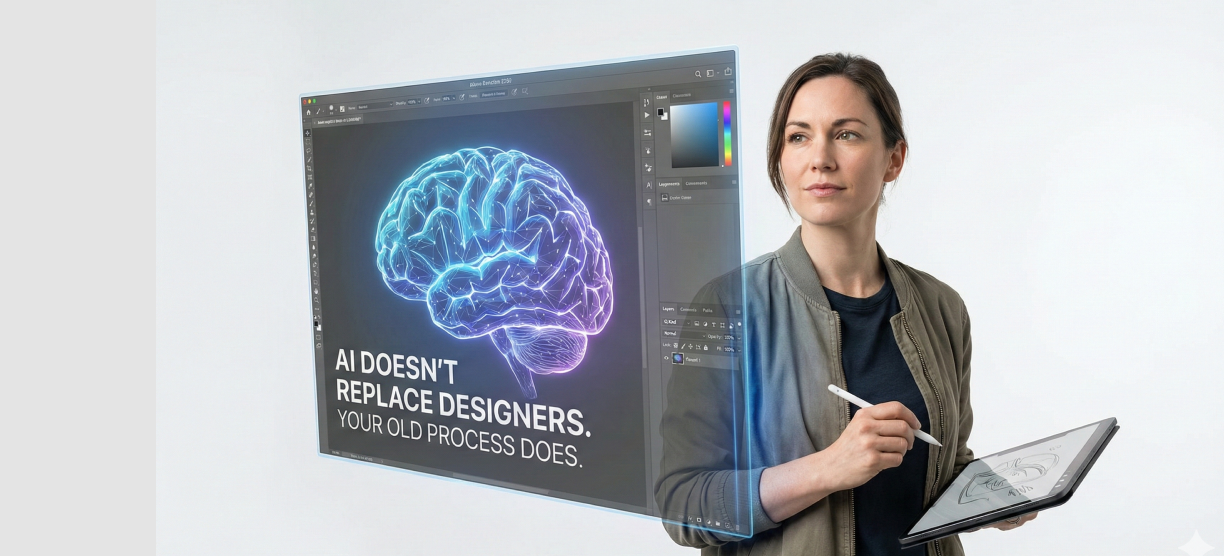
AI Doesn't Replace Designers. Your Old Process Does.
You're worried AI is coming for your job. It's not. It's coming for your process. The designers who survive 2026 aren't the ones fighting AI. They're the ones who stopped optimizing for beauty and started optimizing for conversion.
Read Article
Your MVP Isn't Minimal. That's Why It Fails.
You're not building an MVP. You're building a full product with cosmetic cuts. That's why it takes twice as long and teaches you nothing. A real MVP is uncomfortable because it answers one question, not five.
Read Article
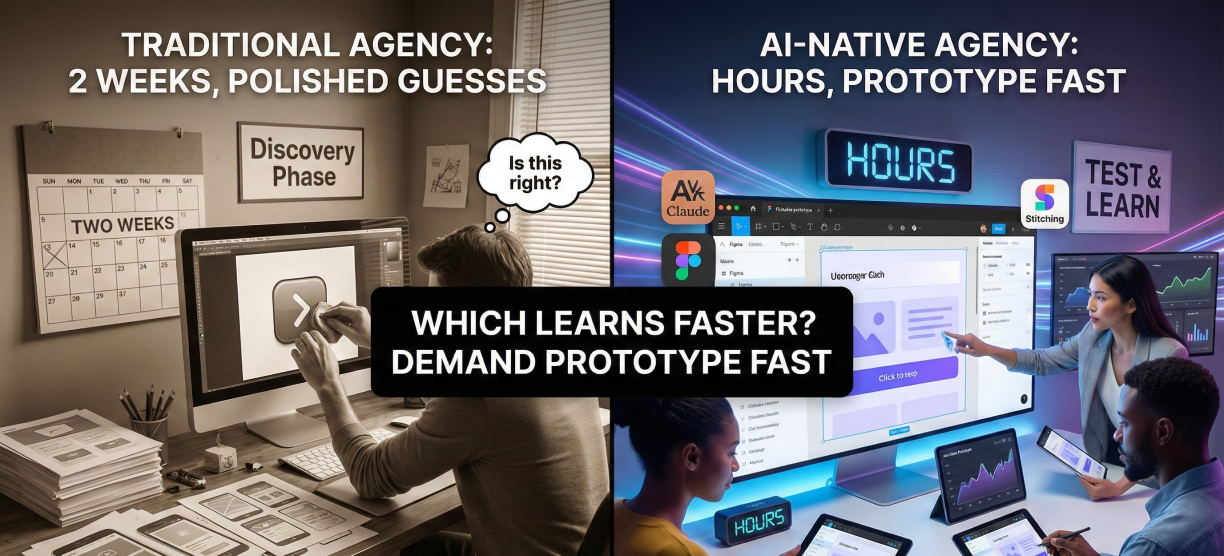
Your Design Agency Isn't Prototyping Fast Enough Anymore
Agencies that aren't using AI to prototype fast are costing you weeks you don't have. If your agency isn't running Figma+Claude workflows or working with Antigravity, you're paying for slowness that's no longer necessary.
Read Article
The Significance of Responsive and Adaptive Design in UI/UX
Explore the critical role of responsive and adaptive design in UI/UX. Understand how it creates a seamless user experience across diverse devices, prioritizes inclusivity, and future-proofs your digital presence.
Read Article
Recent Blog Post

Latest Article

Have an idea in mind? We’re excited to hear about your project and help you bring it to life. Tell us your vision, and we'll craft the perfect solution for you.

What Low-Fi Prototyping Gets Wrong (and How to Fix It Before You Build)

A rough prototype that validates your core concept is valuable. A rough prototype built on wrong assumptions about navigation, data, and state is expensive to fix after you have invested in real design. This post covers the four mistakes that create the most rework and how to catch them before you hand off.
Read More

Low-Fi Prototyping with AI: The Founder's 2026 Workflow

Non-technical founders can now go from a rough sketch to a working, testable interface in under 48 hours using the right AI tool stack. This post covers the specific tools, the cost comparison against a traditional discovery sprint, and the signal that tells you when to move beyond low-fi.
Read More

Your MVP Isn't Minimal. That's Why It Fails.

You're not building an MVP. You're building a full product with cosmetic cuts. That's why it takes twice as long and teaches you nothing. A real MVP is uncomfortable because it answers one question, not five.
Read More

Paper, Pencil, and a Prompt. Why Low-Fi Is Beating Figma.

The fastest path from idea to working product in 2026 is not through Figma. It's a sketch, a description, and a prompt to Claude Code. This post explains the low-fi to AI pipeline, why seed-stage founders don't need polished wireframes, and what a real 48-hour sketch-to-UI example looks like.
Read More

MCP for Non-Technical Founders: What You Actually Need to Know

Model Context Protocol is a technical term with direct budget implications for your product. This post skips the engineering jargon and explains what MCP means for your design timeline, what to ask your agency about it, and what you are still paying for if they don't use it.
Read More

MCP Bidirectional Sync: When Design and Code Actually Stay Connected

Bidirectional MCP sync between Figma and code sounds like the end of design drift. It is closer to the beginning of a real solution. This post explains what syncs cleanly in both directions, what doesn't survive the round trip, and whether bidirectional sync is production-ready for most teams.
Read More
Stop Hiring a Junior UI Designer. Hire an AI-Literate Design Lead Instead.
The hiring math changed. A senior designer with Claude Code, MCP, and a clear design system outproduces a team of three juniors. Here's what to actually look for when hiring designers in 2026.
Read More
Design-to-Code Drift: Why Your Figma File and Product Never Match
The gap between what a Figma file specifies and what gets shipped is not a communication problem. It is a structural problem built into the traditional design-to-development workflow. This post explains the three root causes of design drift and how MCP plus Code Connect addresses each one.
Read More
paper.design vs Figma: Should Your Design Tool Output Code or Pictures?
Figma outputs a proprietary design format. paper.design outputs HTML and CSS. That difference determines whether your design tool is a specification or a deliverable, and it changes what you pay for when you hire a design partner.
Read More
AI Doesn't Replace Designers. Your Old Process Does.
You're worried AI is coming for your job. It's not. It's coming for your process. The designers who survive 2026 aren't the ones fighting AI. They're the ones who stopped optimizing for beauty and started optimizing for conversion.
Read More
Discovery Sprint vs Prototype Sprint: Which One Should You Pay For?
Discovery sprints and prototype sprints solve different problems. Paying for the wrong one is a common and expensive mistake for early-stage founders. This post clarifies what each model actually delivers, when discovery is genuinely worth it, and why the 2026 default has shifted toward prototypes.
Read More
Your Design Agency Does Discovery Sprints. Mine Ships Day One.
Discovery sprints produce documents about a future product. Day-one prototypes produce something you can actually interact with. This post compares what founders experience in each model and why the shift to working-first design changes the value of an agency engagement.
Read More
Why Webflow Is Still the Right Answer for SaaS Marketing Sites
Every year someone says Webflow is about to be replaced. Every year it remains the strongest option for SaaS marketing sites and content-driven web products. This post explains what Webflow does that competitors still can't match, how it fits into an AI-native design workflow, and when to leave it.
Read More
Front-End and UI/UX: Enhancing User-Centric Digital Experiences
Discover how thoughtful UI/UX design can transform your digital presence. This article explores key strategies for creating intuitive, engaging user experiences that align with your brand, boost user satisfaction, and drive business growth.
Read More
Webflow: Redefining Website Design Without Coding
Webflow is web design tool as well as a hosting platform and CMS all in one. While you are probably familiar with all of these, they are usually entirely separate tools.
Read More
How to Run a 2-Week Product Shaping Sprint Without Bloat
A 2-week design sprint with the right AI tooling produces more than a traditional 6-week engagement, but only if the structure is right. This post covers the day-by-day schedule that actually works, what to strip from the traditional format, and what founders need to prepare before day one.
Read More
What Low-Fi Prototyping Gets Wrong (and How to Fix It Before You Build)
A rough prototype that validates your core concept is valuable. A rough prototype built on wrong assumptions about navigation, data, and state is expensive to fix after you have invested in real design. This post covers the four mistakes that create the most rework and how to catch them before you hand off.
Read More
Your Design Agency Isn't Prototyping Fast Enough Anymore
Agencies that aren't using AI to prototype fast are costing you weeks you don't have. If your agency isn't running Figma+Claude workflows or working with Antigravity, you're paying for slowness that's no longer necessary.
Read More
Reinventing Your Digital Presence: The UI/UX Perspective
Explore the transformative power of strategic UI/UX design in elevating your digital presence. Understand how to craft intuitive, user-centric experiences that not only enhance brand alignment but also drive customer satisfaction and business growth.
Read More