The Design Tool Landscape in 2026: What Changed and What It Means
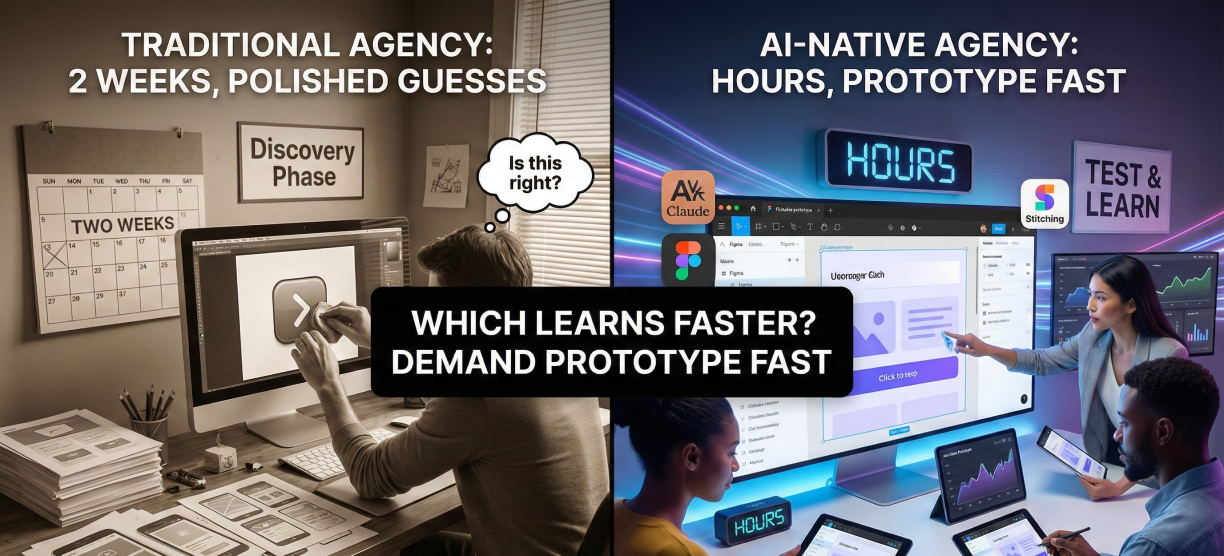
The design tool landscape looked different two years ago. Figma was dominant. Framer was a prototyping curiosity. Webflow was for marketing sites. Claude Code did not exist. The landscape has changed enough that building a product stack based on 2023 assumptions is a reliable way to pay for more hours than you need to.
The key distinction: code output vs design output
The most useful way to categorize design tools in 2026 is by what they produce. Tools that output design artifacts (Figma, Sketch, traditional prototyping tools) produce specifications that developers implement. Tools that output code (Framer, Webflow, paper.design, v0, Claude Code) produce implementations directly.
The significance of this distinction: every design tool that outputs a design artifact rather than code requires a translation step before anything ships. That step costs time and introduces drift. Tools that output code compress or eliminate that step.
Where each major tool fits now
Figma remains the standard for design systems, component libraries, and design team collaboration. Its position as the source of truth for design at established product companies is not threatened by Claude Code. What has changed is its role in the workflow. For AI-native teams, Figma increasingly receives interfaces pushed from Claude Code rather than originating designs that get handed off to development.
Framer has evolved into a capable design-to-code tool for marketing sites and product landing pages. Its component system and visual editor produce clean code without a separate development step. For marketing-heavy products where the primary output is responsive web content, Framer competes directly with Webflow. For product UI, it has limitations that make Figma plus Claude Code a stronger combination.
Webflow remains the strongest option for SaaS marketing sites and content-heavy web products. Its CMS, visual editor, and hosting infrastructure cover the full workflow from design to published site. For Elux Space client work, Webflow handles marketing sites and blog infrastructure while Claude Code handles product UI. They do not compete in our stack. They occupy different parts of the pipeline.
paper.design occupies a specific niche: teams that want a visual canvas with direct HTML/CSS output. It is smaller than Figma's ecosystem but closes the design-to-code gap by eliminating the translation step entirely. Best for small teams where the design-development split is minimal or nonexistent.
v0 by Vercel produces clean React and Next.js components from descriptions or images. Updated in early 2026 with Git integration and a full code editor, it bridges the gap between AI-generated components and production codebases. Best for founders who want polished frontend components without the overhead of a full design system workflow.
Claude Code is not, strictly speaking, a design tool. It is a code generation tool that, when connected to Figma via MCP, can produce interfaces that look and behave like designed products. In the Elux Space workflow, it is the primary prototyping and implementation tool. Figma receives its output, refines it, and documents the design system that resulted.
How to choose
For a seed-stage SaaS product with a technical co-founder or an AI-native agency partner: Claude Code for product UI, Webflow for marketing site. Figma for design system documentation after the core flows are validated.
For a growth-stage product with a dedicated design team: Figma as design system source of truth, Claude Code for rapid feature prototyping, Webflow for marketing. paper.design or Framer for specific web-first interfaces where code output matters.
For a non-technical founder building alone: Lovable or v0 for initial validation, Webflow for marketing and launch. Bring in a design agency when the core flows are working and you need a real design system to build from.
The tool choice is downstream of the workflow choice. Get the workflow right first.